What Are Microgreens? [All the Information You Need in One Page]
If you've eaten at a restaurant where on top of the food, you see a scattering of tiny, colorful leaves, you've already eaten a microgreen, even if nobody bothered to tell you its name. For years this was strictly a chef's move, a way to dress up a plate and add a bit of flavour without much extra cooking. These days you'll find microgreens well outside restaurant kitchens too, sold in trays and clamshells and, increasingly, delivered fresh straight to people's homes.
However, the term 'microgreens' often gets used loosely. People mix it up with sprouts, with baby spinach, sometimes even with the wheatgrass shot at a juice bar. These are genuinely different things, and the difference isn't just semantic. Microgreens differ in how they taste, how nutrient-dense they are, and, importantly, how safe they are to eat raw.
So let's actually answer the question in the title: what are micro-greens, how are they different from sprouts and baby greens and the regular vegetables you already buy, what does the research say about their nutrition, how are they grown, and how does AgriZen grow them?
What Exactly Are Microgreens?
Microgreens are young vegetable, herb, or grain seedlings, cut and eaten shortly after they sprout, long before they'd ever mature into the vegetable you recognise from a sabzi mandi.
Botanically, they're harvested at the cotyledon stage (the first pair of "seed leaves" a plant produces) or just as its first true leaves are starting to unfurl.
Penn State Extension, one of the more respected agricultural research bodies in the US, describes microgreens as plants harvested young and small, usually 1.5 to 3 inches tall. A peer-reviewed review in Frontiers in Genetics puts it in similar terms: two fully expanded cotyledon leaves, sometimes with the first true leaves just showing, grown over roughly 7 to 28 days depending on the variety (full review here).
Now it's important to note something. Let's consider broccoli – A broccoli microgreen and a full head of broccoli start out as the exact same seed. The only thing that changes is when you decide to stop and harvest. With a microgreen, you cut the stem just above the growing medium and leave the root behind. Thus, you consume the same plant at a completely different point in its life than at when you are normally used to eating.
Because of that early harvest, microgreens don't really resemble their grown-up selves. A radish microgreen looks nothing like a radish, and doesn't taste much like one either. It's a small, tender leaf with a sharp, peppery bite, closer in spirit to a fresh herb than a root vegetable.
Microgreens vs. Sprouts vs. Baby Greens vs. Mature Vegetables
As we have seen above, a microgreen, a sprout, a baby green, and a mature vegetable - all four can (and actually do) technically start from the same seed. What changes is the stage of growth, how they're grown, and, just as importantly, how safe they are to eat.
Microgreens vs. Sprouts
People use these two words interchangeably, but Cornell Cooperative Extension draws a fairly sharp line between them:
Sprouts germinate straight in water, with no soil and usually no light at all. Microgreens are grown under light in an actual growing medium such as soil, coco peat (which is what we at AgriZen use), or a hydroponic mat. Sprouts are harvested at the very first sign of growth; microgreens are left to grow until their first true leaves start showing. That's why sprouts look pale and leafless (grown without light, they never turn green properly), while microgreens are unmistakably green and leafy.
They're eaten differently too. A sprout gets eaten whole, seed casing and root included, while a microgreen is cut above the soil, so the seed and root never reach your plate. Flavor follows the same pattern. Cornell describes sprouts as mild and crunchy, while microgreens run peppery, tangy, and sometimes downright spicy, depending on the variety.
That growing-method difference isn't just a taste distinction, either. It has real food-safety consequences. A sprout's seed and root sit in warm, moist water for days, which happens to be exactly the environment bacteria like Salmonella and E. coli need to multiply. The FDA is blunt about this: sprouts grown from seeds and beans under warm, humid conditions can harbour these bacteria, and the agency specifically recommends that children, the elderly, pregnant women, and anyone with a weakened immune system avoid raw sprouts. Microgreens don't carry the same specific risk, largely because they're grown in a lit, aerated setup and harvested by cutting above the growing medium, leaving behind the seed and root, which are the parts most likely to carry surface bacteria in the first place.
Microgreens vs. Baby Greens
Baby greens such as the baby spinach or baby kale you'd find in a salad bag, are grown further along still, usually several weeks past the microgreen stage, until the plant looks like a small version of the mature vegetable with multiple sets of true leaves. They're bigger, milder, and nutritionally sit closer to the mature vegetable than a microgreen does.
Microgreens vs. Mature Vegetables
A mature vegetable is grown for weeks or months, right up until it produces whatever part we actually eat: a root, a head, a fruit. Microgreens never get anywhere near that point. They're harvested at a small fraction of the plant's full lifecycle, while it's still pouring its energy into those first leaves rather than into building out roots, stems, or fruit.
The above differences covered briefly in the following table for easier comprehension:
|
|
Sprouts |
Microgreens |
Baby Greens |
Mature Vegetable |
|
Growing medium |
Water only, no soil |
Soil, coco peat, or hydroponic mat, with light |
Soil, with light |
Soil, with light |
|
Harvest window |
2–7 days |
7–28 days |
3–6 weeks |
6–12+ weeks |
|
What's harvested |
Whole seedling, incl. seed and root |
Stem and leaves, cut above the root |
Stem and leaves |
Root, head, fruit, or full plant |
|
Appearance |
Pale, no true leaves |
Green, first true leaves |
Small, mature-looking leaves |
Full-sized vegetable |
|
Typical flavour |
Mild, crunchy |
Concentrated, often peppery or zesty |
Mild |
Familiar vegetable taste |
That table answers what's different. If what you actually want to know is whether microgreens are worth adding to your basket next to the vegetables you already buy, that's a bigger question with its own answer which we cover in a dedicated piece - Microgreens vs Regular Vegetables: Are They Actually Worth It?
A Brief History: How Microgreens Became a Thing
Microgreens are a fairly recent invention, at least as a named category of food. The story most food writers tell traces back to San Francisco in the 1980s, where chefs started plating tiny, intensely flavored seedlings as garnishes at high-end restaurants. That's also the account the USDA gives directly: Microgreens, as the agency notes, began showing up on chefs' menus as early as the 1980s in San Francisco. Worth knowing that the USDA itself credits this to industry recollection rather than documented archival history, so treat the decade as reliable and the specific year-by-year story as folklore.
For close to twenty years after that, microgreens stayed a restaurant thing, a flourish of color and flavor on a plated dish that nobody expected to see in a regular kitchen. Nutrition science is what eventually pulled them out of that niche. Once researchers started actually measuring how nutrient-dense these tiny leaves were, microgreens stopped being just a garnish and became something people sought out on purpose. Which brings us to the research itself.
Why Microgreens Are Considered Nutrient-Dense: What the Research Actually Shows
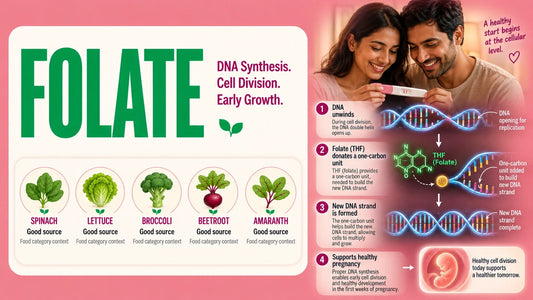
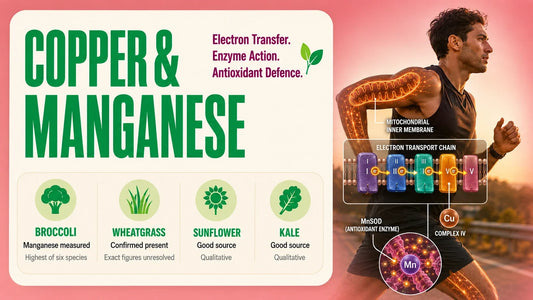
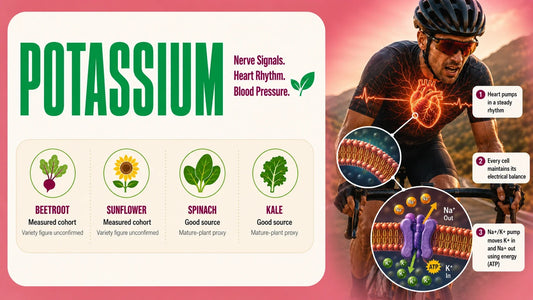
The study that comes up again and again in microgreens research is a 2012 paper from the University of Maryland's College of Agriculture and Natural Resources, done jointly with the USDA. Researchers Zhenlei Xiao, Gene Lester, Yaguang Luo, and Qin Wang tested 25 commercially grown microgreen varieties (cilantro, celery, red cabbage, green basil, arugula, and more) and measured their vitamin C, vitamin E, vitamin K, and beta-carotene levels against the same nutrients in the fully mature vegetable. It's published in the Journal of Agricultural and Food Chemistry, and you can read the full paper here.
The headline result was this -
Every single microgreen tested beat its mature counterpart in at least one of the nutrients measured.
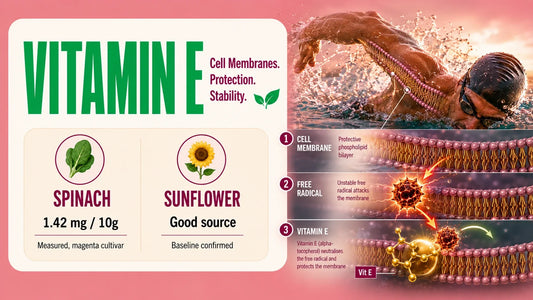
How much of a difference varied a lot, depending on both the variety and the specific nutrient: some showed only a modest edge, others a dramatic one. Red cabbage microgreens, for example, came in at around 147 mg of vitamin C per 100 g fresh weight, several times higher than published figures for mature red cabbage. Vitamin E told a similar story in a handful of varieties.
Now, if you have already seen any advertisements on social media around microgreens, you may have come across the claim that 'Microgreens have 40 times more nutrients'.
Regarding this claim, we would want to be honest with you. It isn't completely untrue, but it is partially true, in a specific context - the Vitamin E component in red cabbage microgreens is genuinely 40X of what you would find in mature red cabbage.However, that number of 40X is not some blanket multiplier that applies to every microgreen and every nutrient.
Microgreens do have some nutrients in far greater concentration than what you would find in mature vegetables, but that also means that some other nutrients would be at lower concentration levels.
This honest clarification is surely not great for us from a marketing POV, but we want to be authentic and genuine with you - our microgreens offerings are definitely nutritious and healthy, and they are worth adding to your plate - and we can make this claim without making factually incorrect statements.
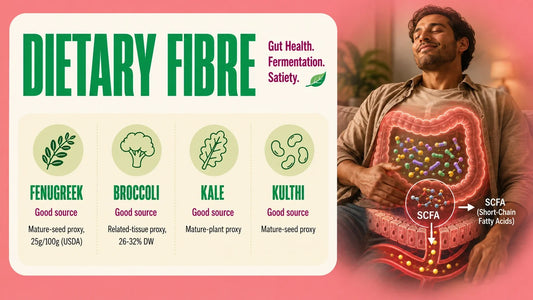
What this also means is this - Microgreens ARE NOT a replacement for mature vegetables. A full-sized vegetable still gives you meaningfully more fibre and sheer volume per serving. Microgreens are better thought of as a concentrated, nutrient-dense addition to what you're already eating: a way to pack a fair amount of vitamins and plant compounds into a small handful. We go through this trade-off properly, nutrient by nutrient, in our piece on Microgreens vs Regular Vegetables: Are They Actually Worth It?
How Microgreens Are Grown
There are broadly two ways people grow microgreens, commercially and at home: in soil or a soil substitute like coco peat, or hydroponically on a soilless mat with nutrients delivered through the water instead. Either way, the crop is sown thick, kept moist and often blacked out for the first couple of days to germinate evenly, then grown under light for the rest of a one-to-three-week cycle. Because the plant is harvested so young, it needs very little fertiliser and is rarely treated with pesticides. There simply isn't enough time in that short a lifecycle for a systemic treatment to make sense.
Since the crop never has to survive outdoor weather or build out a real root system, it's particularly well suited to controlled indoor growing, which is exactly how AgriZen grows it. We cover the full process, temperatures, timelines, and the reasoning behind each stage, in How Microgreens Are Grown: From Seed to Harvest. For now, here's what matters most about how AgriZen specifically does it.
How AgriZen Grows Its Microgreens
AgriZen's microgreens are grown entirely indoors, in a controlled grow unit, not outdoors on a farm. That's not a marketing flourish; it's the actual reason the product turns out consistent and clean batch after batch.
They're grown on shelving under LED grow lights rather than under open sky, so the crop never has to deal with outdoor dust, pollution, agricultural runoff, or unpredictable weather. Those are all real concerns for anything grown outdoors in a dense, polluted city, and avoiding them is a large part of the point. They're watered with RO-purified water, not untreated groundwater or municipal supply, which cuts down the risk of waterborne contaminants reaching the crop while it's growing. And the seeds themselves come from a certified organic supplier, with the certificate on file, though it's worth being precise about what that covers: it's a statement about where the seed comes from, not a certification of the harvested microgreens themselves.
This indoor, controlled setup is also why AgriZen's microgreens get cut and delivered on a short timeline rather than sitting around in transit or storage. Freshness at harvest is one of the few things that directly affects both flavour and nutrient content, since something like vitamin C starts breaking down the moment a leaf is cut. We go into exactly why an indoor grow unit wins out over an outdoor farm in Why AgriZen Grows Microgreens Indoors, Not on a Farm.
Are Microgreens Safe to Eat Raw?
Yes, and this is one of the genuine advantages microgreens have over raw sprouts specifically. As covered above, the FDA's caution around raw sprouts comes down to how they're grown. Seed, root, and all sit in warm, moist conditions for days with no light, precisely the setup bacteria need to multiply. Microgreens are grown in a lit, aerated environment and harvested by cutting the stem above the medium, which leaves the seed and root (the parts most likely to carry bacteria from the original seed lot) behind at harvest.
That said, microgreens are still a raw, ready-to-eat leafy product, so ordinary fresh-produce sense applies: keep them refrigerated, rinse them if your source recommends it, and eat them within their intended shelf life. In the US, the Food Safety Modernization Act's Produce Safety Rule (which governs produce typically eaten raw) explicitly covers microgreens as a category, a good reminder that, like any fresh leafy green, they deserve careful, hygienic handling all the way from growing to your plate. It's a standard we hold ourselves to as well, and if you want the practical side of it once they're in your kitchen, How to Store Microgreens at Home and How to Wash Microgreens the Right Way cover that.
There's a broader principle worth spelling out here, and it applies to any vegetable eaten raw, not just microgreens. Cooking is one of the few things that reliably reduces pesticide residue on fresh produce, and food eaten raw skips that step by definition. A 2026 peer-reviewed scoping review in Frontiers in Environmental Health, which pooled results from 47 separate studies on household washing methods, found that rinsing produce under running water removes a median of just 30.2% of pesticide residue present, ranging from 0% to 94% depending on the specific pesticide and vegetable. Washing still matters and you should still do it, but it's a partial safeguard, not a complete one. That's exactly why it matters so much whether a crop was treated with anything before it reached your kitchen, more so for something you're about to eat raw than for something about to spend twenty minutes in a pot. AgriZen's microgreens are never sprayed with pesticides at any stage, not because a label calls for it, but because an indoor crop harvested within one to three weeks of sowing never faces the field pests a pesticide would otherwise be protecting it against.
How to Use Microgreens in Everyday Cooking
The short version: use them raw, or add them right at the very end of cooking. They're delicate, and heat kills their texture and a good deal of their flavour fast, so they're not something you stir into a dish the way you'd cook down spinach or methi leaves. Beyond that, it's mostly a question of variety. Peppery ones like mustard or radish are good at cutting through something rich; milder ones like pea or sunflower are easy to eat by the handful in a sandwich or a bowl.
There's a whole guide's worth of ground to cover there: breakfasts, mains, garnishes, and drinks, plus which variety suits which dish. We've given it its own post: How to Cook With Microgreens: The Complete Guide.
Explore Each Microgreen AgriZen Grows
Every microgreen has its own flavour, nutrient profile, and best use, which is why each one gets its own dedicated guide covering taste, nutrition, and how to cook with it. We're publishing these progressively, so treat this as a growing library rather than a finished set.
Here's the full line-up, grouped by family:
Brassica (Peppery & Cruciferous)
Mustard · Broccoli · Kale · Kohlrabi · Bok Choy · Turnip · Sango Radish · Pink Radish · China Rose Radish
Legume (Protein-Rich)
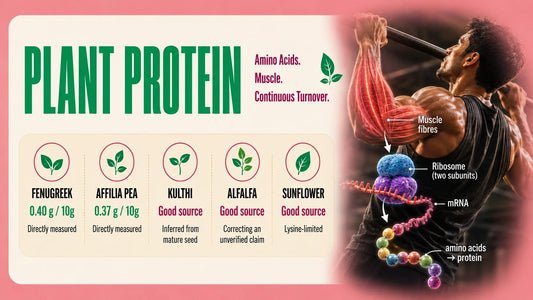
Affilia Pea · Fenugreek · Kulthi · Alfalfa
Leafy & Herb (Everyday Cooking)
Spinach · Lettuce · Coriander · Basil · Amaranth · Beetroot
Grain & Seed (Superfood)
Oats · Wheatgrass · Sunflower · Flax
Frequently Asked Questions
Are microgreens the same as sprouts?
No. Sprouts are germinated in water with no soil or light and eaten whole, seed and root included. Microgreens grow in an actual medium under light and are harvested by cutting the stem above the root, leaving the seed and root behind. That difference shows up in flavour, appearance, and food safety. See the FDA's guidance on raw sprouts for more on why sprouts specifically carry a distinct risk.
Do microgreens taste like the mature vegetable?
Not exactly. Think of it as a more concentrated, sometimes sharper version. A radish microgreen is peppery, a basil microgreen is aromatic, a pea microgreen is sweet and green, but all of it packed into a much smaller, more delicate leaf.
How long do microgreens last after harvest?
It varies by variety and how they're stored, but as a rule, microgreens are a short-shelf-life product: best eaten within a few days of harvest, and kept refrigerated until then.
Are microgreens just a marketing trend, or are they genuinely more nutritious?
The peer-reviewed research, particularly the 2012 University of Maryland/USDA study, does show real, measurable nutrient differences between microgreens and their mature counterparts. How big a difference depends on the variety and nutrient, so "nutrient-dense addition to your diet" is a more accurate way to think about it than "miracle food."
Can I cook microgreens?
You can, but most of what makes them worth eating (flavour, texture, visual appeal) comes through best when they're raw or added right at the end of cooking, rather than cooked through. How to Cook With Microgreens: The Complete Guide goes through this variety by variety.
Which AgriZen product should I start with?
That depends on how much you're looking to fit into your routine day to day, whether you're cooking for yourself or a family, and how often you want deliveries. Choosing the Right AgriZen Subscription: A Buyer's Guide walks through the Everyday Tray, Wellness Duo, and Family Subscription options so you can match one to how you actually eat.
.