Amaranth Microgreens: Taste, Nutrition & How to Use Them
Red amaranth's vivid magenta colour looks a lot like the anthocyanin-driven red of Sango radish or red cabbage, but it isn't the same pigment family at all. Amaranth gets its colour from betalains, the same pigment class responsible for beetroot's deep red, and a peer-reviewed review in the journal Molecular Plant confirms betalains and anthocyanins are mutually exclusive, no plant species has ever been found to produce both (full review here). Amaranth belongs to a small group of plant families, mostly within the order Caryophyllales, that make betalains instead of the anthocyanins most red and purple plants rely on, the same family that includes beetroot, which we cover in more detail in our Beetroot Microgreens post.
Amaranth sits in the Leafy & Herb family, alongside Spinach, Lettuce and Coriander. This guide covers what amaranth microgreens actually are, what's genuinely in them, and how they fit into a meal. For the basics on what separates a microgreen from a sprout or a baby green in the first place, start with What Are Microgreens? A Complete Guide to Nature's Smallest, Most Concentrated Greens, our reference page for everything else on this blog.
What Is an Amaranth Microgreen?
Amaranth microgreens come from Amaranthus, a genus grown both as a leafy vegetable and, in some species, for its grain-like seed, which is why amaranth sometimes gets lumped in with grains despite being a broadleaf plant rather than a true cereal. The leaves are small and tender, ranging from deep magenta to green depending on the variety, with a mild, earthy flavour not far from spinach.
Amaranth seed is quite small, closer in scale to alfalfa than to most other Leafy & Herb varieties, and it's typically ready as a microgreen in ten to fourteen days.
Nutrient Profile
Xiao et al. (2012) measured a wide panel of vitamins across 25 commercially grown microgreens and found garnet amaranth had the highest phylloquinone (vitamin K1) content of every variety tested, at 4.1 µg per gram fresh weight, which works out to 410 µg per 100g fresh weight - the very top of the study's range of 0.6 to 4.1 µg/g (full study here). That's a significant result and worth making explicit rather than noting in passing: amaranth's vitamin K1 content is the single highest of any microgreen in the most comprehensive microgreen composition study published to date.
On iron: a 2025 study in Applied Food Research measured green amaranth microgreens grown under sunlight and found iron at 1.31 mg per 100g fresh weight (full study here). Other studies using different growing systems have reported figures as high as 4.10 mg per 100g. Rather than citing a single number, it's more accurate to say iron content in amaranth microgreens ranges roughly 1 to 4 mg per 100g fresh weight and is strongly dependent on growing method, light source and growing medium.
One further precision worth making about the betalains: amaranth's betacyanins aren't the same compound as beetroot's. In Amaranthus, the principal betacyanin is amaranthin, distinct from beetroot's dominant betanin, even though both are betacyanins. HPLC profiling by Sarker & Oba (2020, Scientific Reports) confirmed amaranthin as the dominant pigment in red A. tricolor genotypes, and found red genotypes carried two to five times higher betacyanin and betaxanthin levels than green genotypes of the same species (full study here). Both amaranthin and betanin are betacyanins, but they're different molecules, a distinction worth knowing if you ever compare betalain research across beetroot and amaranth literature, since the two don't always behave identically in chemical assays.
|
Nutrient / Compound |
Level in Amaranth Microgreens |
Also Notable For |
|
Vitamin K1 (Phylloquinone) |
Rich source - 4.1 µg/g FW (= 410 µg/100g FW) |
Highest of all 25 microgreens tested by Xiao et al. (2012); worth noting for anyone on blood-thinning medication |
|
Betalains (principally amaranthin, a betacyanin) |
Rich source in red varieties |
Chemically distinct from beetroot's betanin, despite both being betacyanins; red genotypes 2–5× higher than green (Sarker & Oba, 2020) |
|
Iron |
Present - ~1–4 mg/100g FW, method-dependent |
Confirmed in multiple studies; level varies significantly with growing system and light source |
|
Vitamin A (Beta-Carotene) |
Present |
A precursor the body converts to vitamin A |
|
Folate (B9) |
Present |
Common across Leafy & Herb family microgreens |
|
Vitamin B6 |
Present |
Common across Leafy & Herb family microgreens |
Ratings above are qualitative rather than a single fixed figure, since values shift with growing conditions, harvest age and analysis method.
None of this amounts to a claim that amaranth microgreens treat, prevent or manage any named health condition. They're a nutrient-dense, colourful addition to a meal, best eaten as part of a varied diet.
Role in the Body
Amaranth is a source of beta-carotene, a plant pigment the body converts into vitamin A, a nutrient involved in vision, immune function and skin health. We cover this in more depth in Vitamin A (Beta-Carotene): Role in the Body, Sources & Which Microgreens Have It, our dedicated nutrient deep-dive.
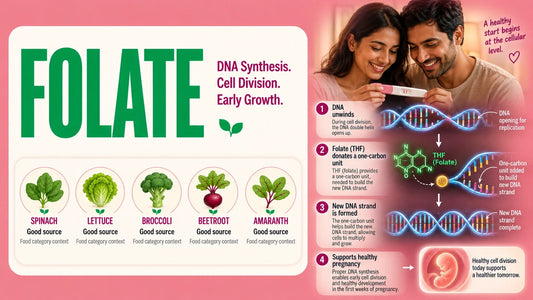
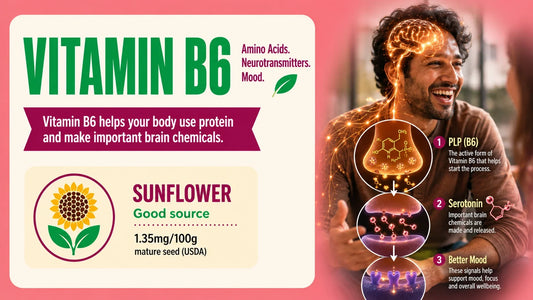
It also carries folate, involved in cell division and DNA synthesis, and vitamin B6, involved in protein metabolism and neurotransmitter production. We cover both in more depth in Folate (Vitamin B9): Role in the Body, Sources & Which Microgreens Have It and Vitamin B6: Role in the Body, Sources & Which Microgreens Have It, our dedicated nutrient deep-dives.
Amaranth's vitamin K1 content, the highest of 25 microgreens studied, is worth flagging separately: vitamin K is a fat-soluble vitamin best known for its role in blood clotting and bone metabolism. For most people, a garnish-sized serving adds meaningfully to daily intake; for anyone on anticoagulant medication like warfarin, consistent vitamin K intake is particularly important to monitor, and a microgreen this high in phylloquinone is worth mentioning to whoever manages that medication.
How to Use Amaranth Microgreens
Amaranth's mild, earthy flavour and striking colour make it as much a visual ingredient as a flavour one, similar in spirit to Sango radish, which is why it works well built into a salad bowl rather than used sparingly as a garnish.
A Quick Growing Note
AgriZen grows every variety the same way, indoors under LED light, watered with RO-purified water, from certified organic seed. We cover that full process, and what the organic-seed certification does and doesn't cover, in How Microgreens Are Grown: From Seed to Harvest.
Frequently Asked Questions
What do amaranth microgreens taste like?
Mild and earthy, not far from spinach, though visually far more striking in the red varieties.
Is amaranth's red colour the same as Sango radish or red cabbage's colour?
No. Sango radish and red cabbage get their colour from anthocyanins. Amaranth gets its colour from betalains, a different, chemically unrelated pigment family that also gives beetroot its colour. Research shows these two pigment types are mutually exclusive - no plant makes both.
Is amaranth's betacyanin the same as beetroot's?
No. Both are betacyanins, but the principal compound in amaranth is amaranthin, while beetroot's is betanin. They're related molecules within the same pigment class, but distinct - a difference that matters when interpreting betalain research across the two plants.
Does amaranth have the highest vitamin K of any AgriZen microgreen?
Yes, based on the most comprehensive microgreen composition study published, Xiao et al. 2012, which measured vitamin K across 25 varieties and found garnet amaranth at the very top at 4.1 µg/g fresh weight. That said, if you're on blood-thinning medication, consistency of intake matters more than the absolute amount, and it's worth flagging amaranth's vitamin K content to whoever manages your medication.
Is amaranth a vegetable or a grain?
Both, depending on the species and how it's grown. Some amaranth varieties are grown for their leaves as a vegetable, others for their small, grain-like seeds. AgriZen grows it as a leafy microgreen.
Which other AgriZen microgreens pair well with amaranth?
Within the Leafy & Herb family, Spinach, Lettuce and Coriander share a similar growing profile, and amaranth's colour makes it a natural addition to a mixed salad bowl alongside any of them.
How long do amaranth microgreens keep after delivery?
Like any fresh, ready-to-eat leafy product, they're best eaten within a few days of delivery and should be kept refrigerated in the meantime. For the full storage guidance, see How to Store Microgreens at Home to Make Them Last Longer.
A Small, Vivid Addition
Amaranth is a good reminder that plants can arrive at a similar-looking result through entirely different biochemistry, its red is not beetroot's red by coincidence but a genuinely shared - and genuinely rare - pigment family, and even the specific betacyanin is different when you look closely enough. Grown indoors under LED light on AgriZen's shelving, watered with RO-purified water, and cut fresh to order, amaranth is one of the most visually distinctive additions on the menu.
Previous
Beetroot Microgreens: Taste, Nutrition & How to Use Them
Next
Sango Radish Microgreens: Taste, Nutrition & How to Use Them