Beetroot Microgreens: Taste, Nutrition & How to Use Them
Eating beetroot can turn urine pink or red afterward, a harmless phenomenon called beeturia, and it's genuinely useful to know about before it happens unexpectedly rather than to discover it and worry. It's caused by betalain, the same pigment responsible for beetroot's deep red colour, passing through the body largely intact in some people. Research on the phenomenon, published in the peer-reviewed journal QJM, traces it to how the pigment is broken down, or isn't, in the colon (full study here). It's harmless on its own, though it can look alarming if you don't know what's causing it.
Beetroot sits in the Leafy & Herb family, alongside Spinach, Lettuce and Coriander. This guide covers what beetroot microgreens actually are, what's genuinely in them, and how they fit into a meal. For the basics on what separates a microgreen from a sprout or a baby green in the first place, start with What Are Microgreens? A Complete Guide to Nature's Smallest, Most Concentrated Greens, our reference page for everything else on this blog.
What Is a Beetroot Microgreen?
Beetroot microgreens come from Beta vulgaris, the same plant grown for the root vegetable and for beet greens. The stems carry the same vivid red-purple colour as the mature root, fading to green leaves at the top. The flavour is earthy and mildly sweet, a gentler, more delicate version of mature beet greens, without the heaviness of the root itself.
One quirk worth knowing: what looks like a single beet seed is actually a small seed cluster, capable of producing more than one seedling from what appears to be one seed. Grown to microgreen size, beetroot is typically ready in eight to twelve days.
Nutrient Profile
A 2025 peer-reviewed comparative study, published in Scientific Reports, measured nutrient and bioactive compound levels across six microgreens, including red beet, broccoli, black radish, pea, sunflower and bean. Red beet came out highest of the six for total flavonoid content and citric acid, but also had the lowest phosphorus, calcium and vitamin C of the group (full study here). We're including both sides of that comparison because it's a more honest picture than only citing the numbers that favour beetroot.
A 2024 peer-reviewed study in Processes (Stajčić et al.) measured betalain fractions specifically in beetroot microgreens and found that the pigments aren't a single compound. Betalains split into red-violet betacyanins and yellow-orange betaxanthins, and in beetroot microgreens the betacyanins dominate heavily: 43.58 mg betacyanin equivalents per 100g dry weight versus 13.68 mg betaxanthin equivalents, roughly a 3:1 ratio (full study here). The principal betacyanin in beet is betanin. The same study found beetroot microgreens had the highest total phenolics (639.85 mg GAE per 100g dry weight) and the highest antioxidant activity of the five microgreens it tested.
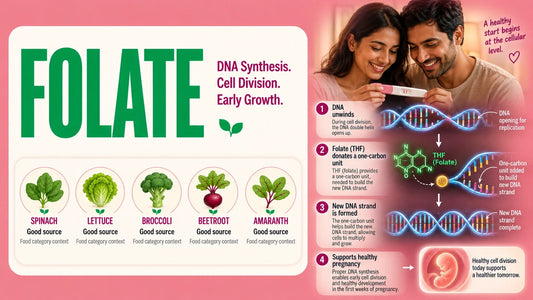
On folate specifically: mature beetroot root is well documented at around 109 µg per 100g, but a beetroot-microgreen-specific folate figure hasn't been published in a peer-reviewed study we could find. We're presenting the mature-root value as a reasonable expectation rather than a directly measured microgreen number.
|
Nutrient / Compound |
Level in Beetroot Microgreens |
Also Notable For |
|
Betacyanins (principally betanin) |
Rich source - 43.58 mg BE/100g DW |
Dominant fraction of betalains in beetroot microgreens, 3:1 ratio over betaxanthins (Stajčić et al., 2024) |
|
Betaxanthins |
Present - 13.68 mg VE/100g DW |
The yellow-orange fraction of betalains; present alongside betacyanins |
|
Flavonoids |
Rich source |
Highest of 6 microgreens compared in Balik et al. (2025) |
|
Folate (B9) |
Present |
Well documented in mature beetroot (~109 µg/100g); microgreen-specific figure not yet published |
|
Potassium |
Present |
Common across the Leafy & Herb family |
|
Iron |
Present |
Common across the Leafy & Herb family |
Ratings above are qualitative rather than a single fixed figure, since values shift with growing conditions, harvest age and analysis method. Betalain figures from Stajčić et al. are on a dry-weight basis and should not be compared directly to fresh-weight figures without adjustment.
None of this amounts to a claim that beetroot microgreens treat, prevent or manage any named health condition. They're a colourful, nutrient-dense addition to a meal, best eaten as part of a varied diet.
Role in the Body
Beetroot is best known, at the mature stage, as a source of folate, a B-vitamin involved in cell division and DNA synthesis. We go through folate in more depth, including what's known and not yet known about levels at the microgreen stage specifically, in Folate (Vitamin B9): Role in the Body, Sources & Which Microgreens Have It, our dedicated nutrient deep-dive.
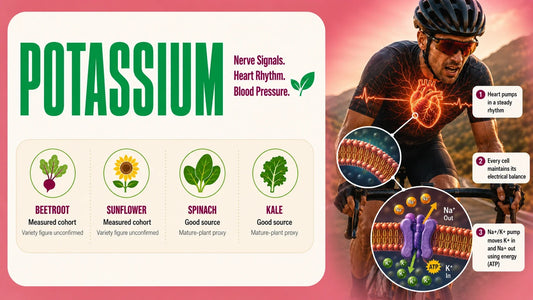
Beetroot also carries potassium, a mineral involved in fluid balance and normal muscle and nerve function, and iron, a mineral central to how the body transports oxygen through the blood. We cover both in more depth in Potassium: Role in the Body, Sources & Which Microgreens Have It and Iron: Role in the Body, Sources & Which Microgreens Have It, our dedicated nutrient deep-dives.
How to Use Beetroot Microgreens
Beetroot's earthy sweetness and striking colour make it a natural finishing ingredient, especially alongside other colourful vegetables where it can do double duty for flavour and visual appeal.
A Quick Growing Note
AgriZen grows every variety the same way, indoors under LED light, watered with RO-purified water, from certified organic seed. We cover that full process, and what the organic-seed certification does and doesn't cover, in How Microgreens Are Grown: From Seed to Harvest.
Frequently Asked Questions
What do beetroot microgreens taste like?
Earthy and mildly sweet, a gentler version of mature beet greens without the heaviness of the root.
Is the red urine after eating beetroot something to worry about?
On its own, no. It's called beeturia, caused by the pigment betalain passing through the body, and it's considered harmless. That said, if you notice red or discoloured urine and haven't eaten beetroot, or if it comes with pain or other symptoms, that's worth mentioning to a doctor since those cases have a different explanation. This applies to beetroot generally, including at the microgreen stage, since the pigment is the same.
What are betacyanins and betaxanthins?
They're the two sub-classes of betalain pigment. Betacyanins are the red-violet ones - in beetroot, the dominant one is betanin, which is what gives beetroot its characteristic colour and is responsible for beeturia. Betaxanthins are yellow-orange. In beetroot microgreens specifically, betacyanins outweigh betaxanthins roughly 3:1.
Which other AgriZen microgreens pair well with beetroot?
Within the Leafy & Herb family, Spinach, Lettuce and Coriander share a similar growing profile. Outside the family, Sango radish is a natural pairing for colour as much as flavour, which is why they show up together in AgriZen's hummus bowl recipe.
Can beetroot microgreens be cooked?
They can, but their colour and delicate texture fade quickly with heat. They're best eaten raw or added right at the very end of cooking, more as a finishing touch than a cooked ingredient.
How long do beetroot microgreens keep after delivery?
Like any fresh, ready-to-eat leafy product, they're best eaten within a few days of delivery and should be kept refrigerated in the meantime. For the full storage guidance, see How to Store Microgreens at Home to Make Them Last Longer.
A Small, Vivid Addition
Beetroot microgreens are a good example of why it's worth understanding a plant's quirks along with its nutrients - the same pigment that makes them so visually striking is also behind a harmless but startling side effect some people notice afterward, and it's also the pigment now documented at specific concentrations in the microgreen itself. Grown indoors under LED light on AgriZen's shelving, watered with RO-purified water, and cut fresh to order, beetroot is one of the more colourful, distinctive additions on the menu.
Previous
Kale Microgreens: Taste, Nutrition & How to Use Them
Next
Amaranth Microgreens: Taste, Nutrition & How to Use Them