Oats Microgreens: Taste, Nutrition & How to Use Them
Oats carry beta-glucan, the soluble fibre behind the cholesterol-related claim on oatmeal packaging, and it's tempting to assume an oat microgreen carries some of that same reputation. Peer-reviewed research tracking beta-glucan across different oat plant tissues tells a clearer story: concentrations in leaves measured around 0.48%, compared to roughly 1.28% in the grain-bearing panicle, the part of the plant that eventually becomes the oats in a bowl of porridge (full study here). Beta-glucan accumulates heavily in the cell walls of the grain's endosperm specifically, not the leaf tissue that makes up an oat microgreen, so the cholesterol-related reputation belongs mostly to the mature grain, not the young shoot AgriZen grows.
Oats sit in the Grain & Seed family, alongside Wheatgrass, Sunflower and Flax. This guide covers what oat microgreens actually are, what's genuinely in them, and how they fit into a meal. For the basics on what separates a microgreen from a sprout or a baby green in the first place, start with What Are Microgreens? A Complete Guide to Nature's Smallest, Most Concentrated Greens, our reference page for everything else on this blog.
What Is an Oat Microgreen?
Oat microgreens come from Avena sativa, the same plant grown for oat grain. The blades look similar in shape to wheatgrass but slightly broader, with a mild, grassy, faintly sweet flavour. Unlike wheatgrass, which is almost always juiced because of its tough fibre, oat microgreens are tender enough to eat as a leaf, closer in texture to other AgriZen microgreens than to its grassy sibling.
Grown to microgreen size, oats are typically ready in eight to ten days.
Nutrient Profile
As covered above, the specific soluble fibre oats are best known for, beta-glucan, concentrates heavily in the grain rather than the leaf. That's a genuine, mechanism-level reason not to market an oat microgreen on oatmeal's cholesterol-related reputation.
But there's a genuinely distinctive compound family worth knowing about instead: avenanthramides, a group of antioxidant polyphenols found in no other common cereal grain, unique to oats. Peer-reviewed research on developing oat plants found avenanthramides constitutively present in seedling leaf tissue, well before the grain forms (full study here). A separate 2019 study, published in Food Chemistry, went further and quantified the change directly: avenanthramide content increased by twenty-five times from seed to seedling, with a group of specific avenanthramides, labelled 2p, 2c and 2f, making up less than 20% of the total in seedling tissue, meaning a wider spread of avenanthramide types appears as the plant develops (full study here). A twenty-five-fold increase from seed to seedling is a genuinely striking number, and it's specific to oats among the grains AgriZen grows.
Oat microgreens still contribute dietary fibre in the way most leafy microgreens do, just not the concentrated soluble beta-glucan fraction specifically associated with the grain. We don't have oat-microgreen-specific figures for total dietary fibre or minerals like iron, manganese and zinc, so we're not presenting a specific number for those here.
|
Nutrient / Compound |
Level in Oat Microgreens |
Also Notable For |
|
Avenanthramides (unique-to-oats antioxidants) |
Present, substantially increased vs. seed |
Content rises roughly 25-fold from seed to seedling; found in no other common cereal grain |
|
Beta-glucan (soluble fibre) |
Present, notably lower than the grain |
Leaf tissue measured at roughly 0.48%, versus roughly 1.28% in the grain-bearing panicle |
|
Dietary Fibre (general) |
Present |
No oat-microgreen-specific figure yet published; leafy tissue contributes fibre generally |
Ratings above are qualitative rather than a single fixed figure, since fibre and polyphenol composition shifts with growing conditions, harvest age and plant tissue type.
None of this amounts to a claim that oat microgreens treat, prevent or manage any named health condition, including the cholesterol-related claims associated with whole oat grain. They're a nutrient-dense addition to a meal, best eaten as part of a varied diet, with whole oats remaining the more established choice if beta-glucan intake specifically is the goal.
Role in the Body
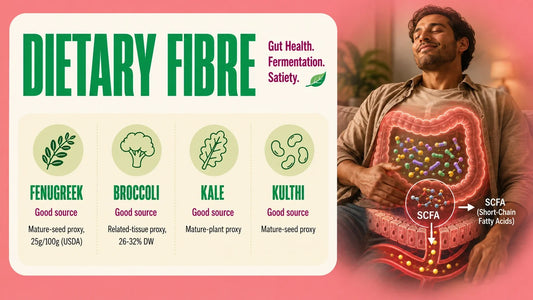
Oats are a source of dietary fibre, which plays a role in digestive health and helps regulate how quickly food moves through the gut. We go through the fuller picture, including the leaf-versus-grain distinction covered above, in Dietary Fibre: Role in the Body, Sources & Which Microgreens Have It, our dedicated nutrient deep-dive.
How to Use Oat Microgreens
Oat's mild, grassy sweetness makes it an easy, unobtrusive addition to a bowl of mixed ingredients, similar in spirit to flax, valued for rounding out a dish rather than standing out in it.
A Quick Growing Note
AgriZen grows every variety the same way, indoors under LED light, watered with RO-purified water, from certified organic seed. We cover that full process, and what the organic-seed certification does and doesn't cover, in How Microgreens Are Grown: From Seed to Harvest.
Frequently Asked Questions
What do oat microgreens taste like?
Mild, grassy and faintly sweet, tender enough to eat as a leaf rather than needing to be juiced.
Do oat microgreens have the cholesterol-lowering beta-glucan oats are known for?
Not to the same degree. Beta-glucan concentrates heavily in the oat grain's endosperm, and research measuring it across different plant tissues found notably lower levels in the leaf than in the grain-bearing panicle.
What are avenanthramides, and are they in oat microgreens?
Avenanthramides are antioxidant polyphenols unique to oats among common cereal grains. Research confirms they're present in oat seedling leaf tissue, and one study found their concentration rises roughly 25-fold from seed to seedling, meaning the microgreen stage is genuinely relevant for this particular compound.
Are oat microgreens the same as wheatgrass?
No, though they look similar and belong to the same Grain & Seed family. Oat microgreens are tender enough to eat as a leaf, while wheatgrass is fibrous enough that it's almost always juiced instead.
Which other AgriZen microgreens pair well with oats?
Within the Grain & Seed family, Wheatgrass, Sunflower and Flax share a similar growing profile.
How long do oat microgreens keep after delivery?
Like any fresh, ready-to-eat leafy product, they're best eaten within a few days of delivery and should be kept refrigerated in the meantime. For the full storage guidance, see How to Store Microgreens at Home to Make Them Last Longer.
A Small, Grounding Addition
Oats round out this family with a more interesting lesson than the beta-glucan gap alone: the compound genuinely unique to oats, avenanthramides, is actually more concentrated at the seedling stage than in the seed, a real point in the microgreen's favour rather than against it. Grown indoors under LED light on AgriZen's shelving, watered with RO-purified water, and cut fresh to order, oat microgreens earn their place in a bowl for their mild, grounding flavour and their own distinctive chemistry.
Previous
Alfalfa Microgreens: Taste, Nutrition & How to Use Them
Next
Flax Microgreens: Taste, Nutrition & How to Use Them