Sunflower Microgreens: Taste, Nutrition & How to Use Them
Sunflower microgreens get called a complete protein often enough online that it's worth checking before repeating it. It's not quite accurate. Sunflower protein is a genuinely good plant protein source, but it runs short on one specific essential amino acid, lysine, which is exactly the kind of detail that gets smoothed over when a claim travels further than the research behind it.
Sunflower sits in the Grain & Seed family, alongside Oats, Wheatgrass and Flax. This guide covers what sunflower microgreens actually are, what's genuinely in them, and how they fit into a meal. For the basics on what separates a microgreen from a sprout or a baby green in the first place, start with What Are Microgreens? A Complete Guide to Nature's Smallest, Most Concentrated Greens, our reference page for everything else on this blog.
What Is a Sunflower Microgreen?
Sunflower microgreens come from Helianthus annuus, the same plant grown for sunflower seeds and, eventually, sunflower fields. At the microgreen stage, they're one of the larger and more substantial varieties AgriZen grows, with thick, pale stems and broad, crunchy cotyledons. The flavour is mild and distinctly nutty, closer to a raw sunflower seed than to anything green or peppery.
Grown to microgreen size, sunflower is typically ready between seven and ten days from sowing, one of the faster crops in this family despite its size.
Nutrient Profile
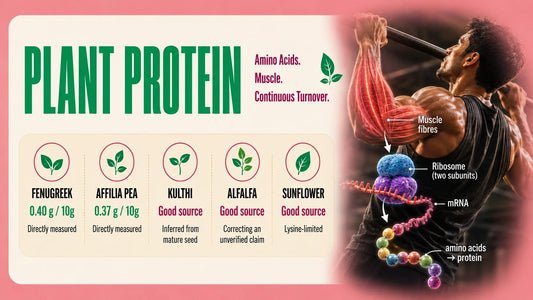
A peer-reviewed comparative study out of India, published in the Journal of Food Composition and Analysis, measured protein, dietary fibre, minerals and vitamins across ten culinary microgreens. Sunflower came out among the highest of the ten for protein content, at 3.9 g per 100 g fresh weight (full study here).
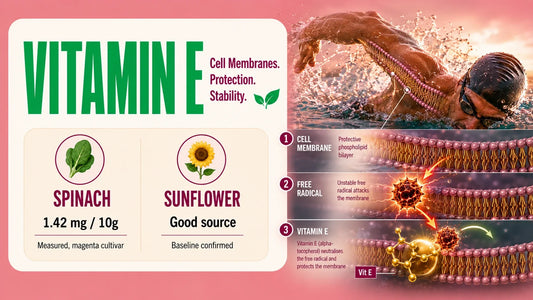
On vitamin E specifically, we now have direct microgreen-stage confirmation rather than just an inference from the seed's oil content. A 2024 peer-reviewed study on sunflower microgreens, published in the Journal of Soil Science and Plant Nutrition, measured tocopherol content directly and found that a heavy iron biofortification treatment reduced alpha-tocopherol and total tocopherol content by 23% and 61% respectively compared to untreated microgreens (full study here). The specific percentages matter less here than what the study confirms: tocopherols are a substantial, measurable, quantifiable part of sunflower microgreen composition, not just a general inference from the mature seed's oil content, and heavy iron biofortification is one factor that can suppress it, a useful note for growers.
On chlorogenic acid: sunflower seed extract has been measured at roughly 1.65% total chlorogenic acids by weight, a compound sunflower seeds are well known for. We don't have a sunflower-microgreen-specific chlorogenic acid figure, so we're presenting the seed data as context rather than a microgreen measurement.
On selenium: sunflower seeds are a recognised selenium source, but a robust sunflower-microgreen-specific selenium figure hasn't been published, so we're not claiming a specific number here. What is well documented is that sunflower microgreens ranked among the highest of six microgreens compared for both zinc and calcium content in a 2025 comparative study.
On the protein-completeness question specifically: the Journal of Nutrition has published detailed work on how amino acid scoring and digestibility actually work across plant proteins, including sunflower seed specifically (full study here). The short version: sunflower protein supplies most essential amino acids well, but lysine consistently comes in below the reference pattern used to judge a protein complete.
|
Nutrient |
Level in Sunflower Microgreens |
Also Notable For |
|
Protein |
Good source |
Among the highest of 10 microgreens compared in Ghoora et al. (2020); limited in lysine, not a complete protein alone |
|
Vitamin E (Tocopherols) |
Good source - directly measured at the microgreen stage |
Confirmed and quantified in a 2024 sunflower microgreen study; heavy iron biofortification shown to reduce it |
|
Zinc & Calcium |
Good source |
Ranked among the highest of 6 microgreens compared in a 2025 study |
|
Chlorogenic Acid |
Present in the seed (~1.65% w/w); microgreen figure not yet published |
A well-documented sunflower seed compound; presence at the microgreen stage is a reasonable expectation, not a confirmed measurement |
|
Vitamin A (Beta-Carotene) |
Present |
A precursor the body converts to vitamin A |
Ratings above are qualitative rather than a single fixed figure, since values shift with growing conditions, harvest age and analysis method.
None of this amounts to a claim that sunflower microgreens treat, prevent or manage any named health condition. They're a nutrient-dense, filling addition to a meal, best eaten as part of a varied diet that includes other protein sources rather than relied on as a standalone one.
Role in the Body
Sunflower's most distinctive nutrient is vitamin E, a fat-soluble vitamin that functions as an antioxidant and plays a role in immune function and skin health. We go through vitamin E in more depth, including how sunflower compares to other AgriZen varieties, in Vitamin E: Role in the Body, Sources & Which Microgreens Have It, our dedicated nutrient deep-dive.
Sunflower also carries beta-carotene, a plant pigment the body converts into vitamin A. We cover beta-carotene and vitamin A in more depth in Vitamin A (Beta-Carotene): Role in the Body, Sources & Which Microgreens Have It, our dedicated nutrient deep-dive.
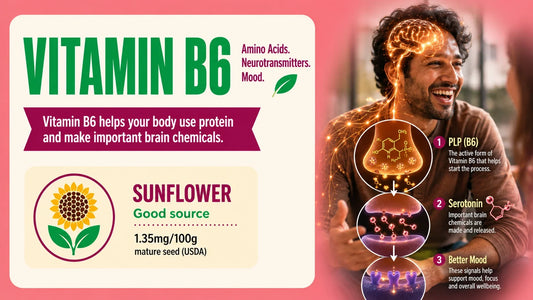
Alongside these, sunflower is a source of vitamin B6, a B-vitamin involved in protein metabolism and neurotransmitter production. We cover it in more depth in Vitamin B6: Role in the Body, Sources & Which Microgreens Have It, our dedicated nutrient deep-dive.
As covered above, sunflower's protein is a genuinely useful plant protein source, just not a nutritionally complete one on its own, since it runs short on lysine relative to the reference amino acid pattern.
How to Use Sunflower Microgreens
Sunflower's crunch and mild, nutty flavour make it one of the sturdier microgreens to build a dish around rather than just finish one with, it holds its texture in a sandwich in a way most leafier varieties don't.
A Quick Growing Note
AgriZen grows every variety the same way, indoors under LED light, watered with RO-purified water, from certified organic seed. We cover that full process, and what the organic-seed certification does and doesn't cover, in How Microgreens Are Grown: From Seed to Harvest.
The one thing that's genuinely different about sunflower is the weight. Because the seed is thick and heavy, growers typically stack a weighted tray on top during the blackout period, which helps the hulls fall away cleanly and keeps the stems growing straight rather than curling. Heavy iron biofortification during growing has also been shown to reduce tocopherol content, so AgriZen doesn't push mineral fortification aggressively on this variety, to protect its natural vitamin E content.
Frequently Asked Questions
What do sunflower microgreens taste like?
Mild and distinctly nutty, closer to a raw sunflower seed than to anything green or peppery, with a satisfying crunch that holds up well in a sandwich.
Are sunflower microgreens really a complete protein?
Not quite. They're a good source of plant protein and cover most essential amino acids well, but they run short on lysine relative to the reference pattern used to define a complete protein.
Do sunflower microgreens actually contain measurable vitamin E?
Yes, directly confirmed. A 2024 study measured tocopherol content in sunflower microgreens specifically, rather than just inferring it from the mature seed's oil content, and found it's a substantial, quantifiable part of the microgreen's composition.
Which other AgriZen microgreens pair well with sunflower?
Within the Grain & Seed family, Oats, Wheatgrass and Flax share a similar growing profile. Outside the family, Affilia Pea is a natural pairing.
How long do sunflower microgreens keep after delivery?
Like any fresh, ready-to-eat leafy product, they're best eaten within a few days of delivery and should be kept refrigerated in the meantime. For the full storage guidance, see How to Store Microgreens at Home to Make Them Last Longer.
Can sunflower microgreens be cooked?
They can, but their crunch is most of the appeal, and heat softens that fairly quickly. They're best added raw or right at the very end of cooking.
A Small, Filling Addition
Sunflower microgreens are a good reminder that a nutrient-dense food doesn't have to be nutritionally perfect to be worth eating regularly, a strong plant protein and vitamin E source that just happens to need a lysine-rich partner to round it out. Grown indoors under LED light on AgriZen's shelving, watered with RO-purified water, and cut fresh to order, it's one of the heartier, more filling additions to a plate rather than a delicate one.
Previous
Wheatgrass Microgreens: Taste, Nutrition & How to Use Them
Next
Coriander Microgreens: Taste, Nutrition & How to Use Them